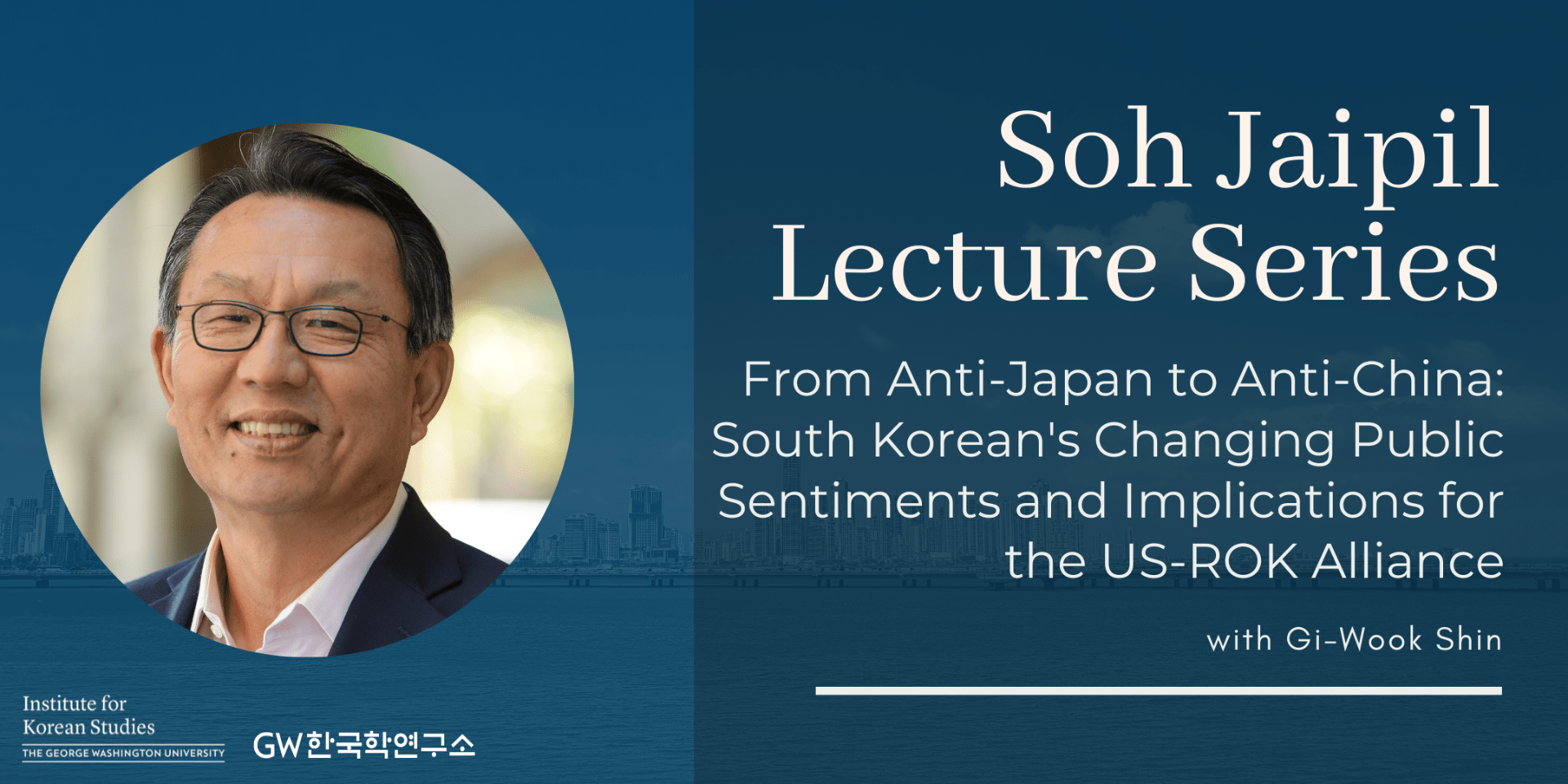
10/05/2022 | Soh Jaipil Lecture Series with Gi-Wook Shin

From Anti-Japan to Anti-China: South Korean’s Changing Public Sentiments and Implications for the US-ROK Alliance

Wednesday, October 5, 2022

3:00 PM – 4:30 PM EDT

Hybrid Event

In Person, George Washington University, Elliott School of International Affairs, Lindner Family Commons, Room 602

And Virtual via Zoom

Event Description

From resentment towards economic retaliation over THAAD deployment to culture wars over hanbok and kimchi, South Korean public sentiment towards China has drastically deteriorated over the past few years, becoming even worse than sentiment toward Japan. In this talk, Professor Gi-Wook Shin will illuminate factors that contribute to Koreans’ negative views of China, in comparison to Koreans’ historically negative sentiments of Japan and anti-American sentiments of past decades. He will discuss how these anti-China sentiments may play out in the Yoon Suk-Yeol administration’s policy towards China, as well as potential implications for the U.S.-ROK alliance.

Speaker
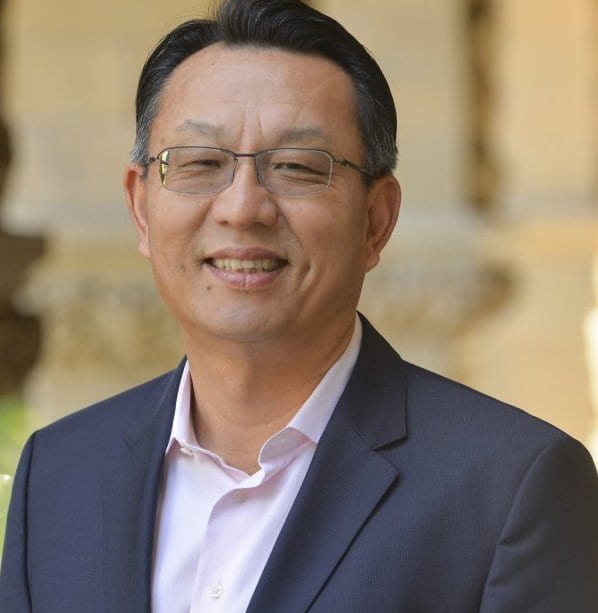
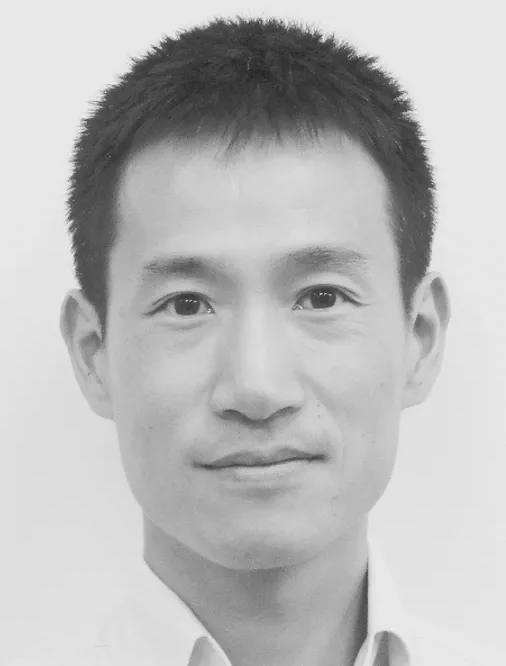
headshot of Gi Wook Shin

Gi-Wook Shin is the William J. Perry Professor of Contemporary Korea in Sociology and a senior fellow of the Freeman Spogli Institute for International Studies at Stanford University. He has been serving as the director of the Walter H. Shorenstein Asia-Pacific Research Center since 2005, as well as the founding director of the Korea Program since 2001. His research concentrates on social movements, nationalism, development, and international relations, with focus on Korea and broader Asia. Shin is the author/editor of over twenty books and numerous articles, including South Korea’s Democracy in Crisis: The Threats of Illiberalism, Populism, and Polarization; The North Korean Conundrum: Balancing Human Rights and Nuclear Security; Shifting Gears in Innovation Policy from Asia; Divergent Memories: Opinion Leaders and the Asia-Pacific War; One Alliance, Two Lenses: U.S.-Korea Relations in a New Era; Cross Currents: Regionalism and Nationalism in Northeast Asia; and Ethnic Nationalism in Korea.

Moderator
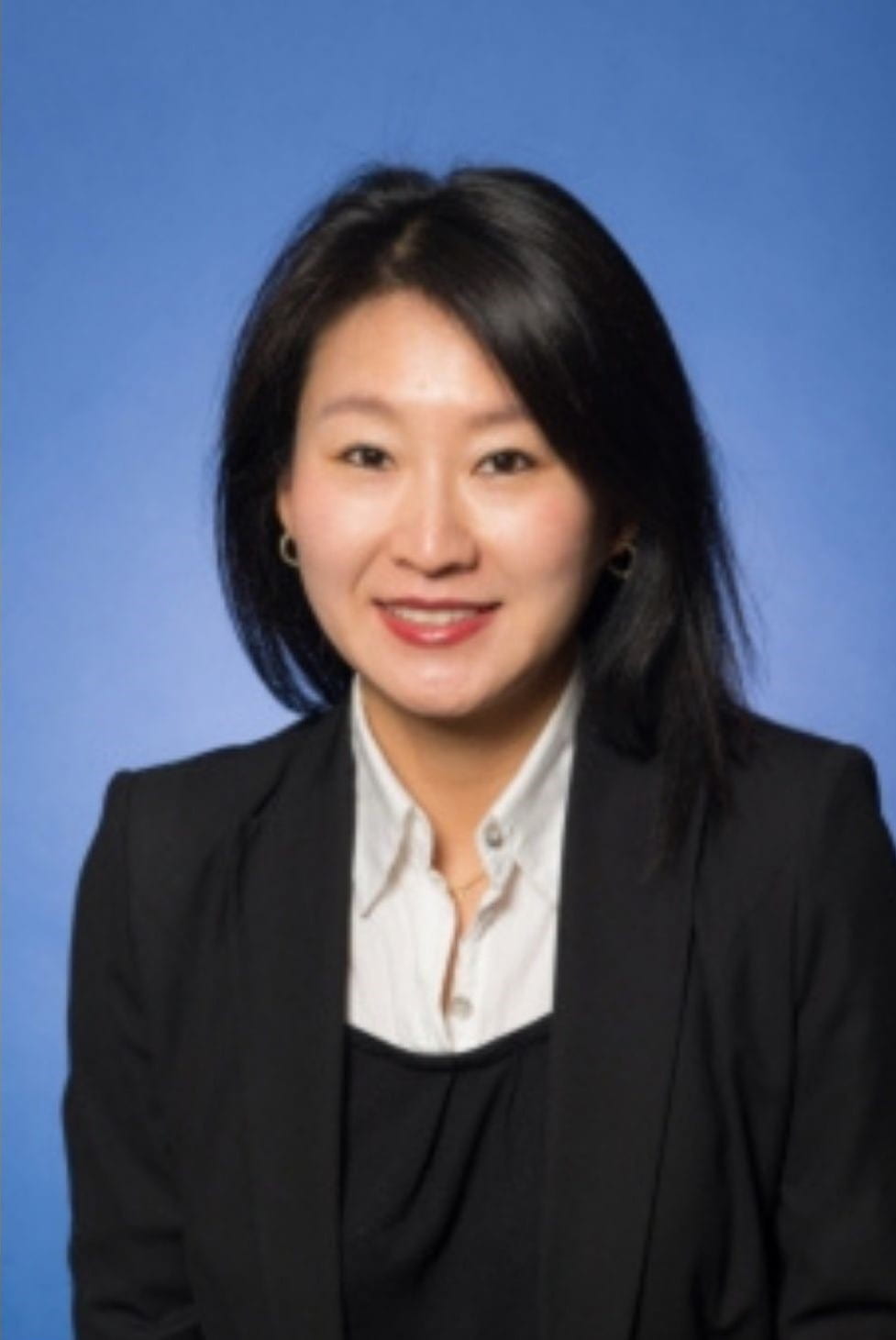
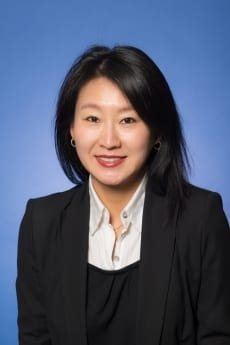
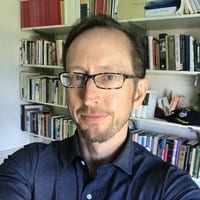
portrait of Jisoo Kim in professional attire

Jisoo M. Kim is Korea Foundation Associate Professor of History, International Affairs, and East Asian Languages and Literatures. She currently serves as the Director of the Institute for Korean Studies and the Co-Director of the East Asia National Resource Center at GW. She also serves as the Editor-in-Chief of the Journal of Korean Studies. She is a specialist in gender, law, and emotions in Korean history. Her broader research interests include gender and sexuality, crime and justice, forensic medicine, literary representations of the law, history of emotions, vernacular, and gender writing. She is the author of The Emotions of Justice: Gender, Status, and Legal Performance in Chosŏn Korea (University of Washington Press, 2015), which was awarded the 2017 James Palais Prize of the Association for Asian Studies. She is also the co-editor of The Great East Asian War and the Birth of the Korean Nation by JaHyun Kim Haboush (Columbia University Press, 2016). She is currently working on a book project tentatively entitled Sexual Desire, Crime, and Gendered Subjects: A History of Adultery Law in Korea. She received her M.A., M.Phil., and Ph.D. in East Asian Languages and Cultures from Columbia University.

logo of the GW Institute for Korean Studies in English
logo of the GW Institute for Korean Studies in Korean

10/03/2022 | The Postmemory Generation in South Korea: Contemporary Korean Arts and Films on the Memories of the Korean War, 2000-2020

Monday, October 3, 2022

2:00 PM – 3:30 PM Eastern Time

Hybrid Event

In Person, George Washington University, Elliott School of International Affairs, Lindner Family
Commons (Room 602)

And Virtual via Zoom 

About this event

What has happened to the post memory generation in South Korea? The country is notorious for conflicting views toward the Korean and Cold War among different generations throughout a range of political and cultural spectrums. This talk provides a rare opportunity to look at the oblivious postwar South Korean society, generation gaps in the Korean War, and ongoing ideological conflicts in South Korea. The historical interpretation of the Korean War has been the center of contentious debate in postwar South Korean society among different generations: 1) war survivors born and raised in the 1950s, 2) protestors participating in the Democratization Movement under the Military Dictatorship in the 1960s until the end of the 1980s, and 3) Shinsaedae (New Generation), whose understanding of the war has been largely controlled by the secondary sources of popular culture—who can be dubbed as the post memory generation in South Korea.

Presented by Dong-Yeon Koh, an art critic and author of The Korean War and Postmemory Generation (London: Routledge, 2021), it also serves as an important avenue toward the understanding of contemporary Korean arts and films on the Korean War by the generation of artists born after the late 1960s and afterward. The talk will be presented with the images of notable artworks by 13 contemporary Korean artists and filmmakers in artistic genres of documentary photography, participatory arts, performance arts, documentary films media installations, and memorials.

Speaker

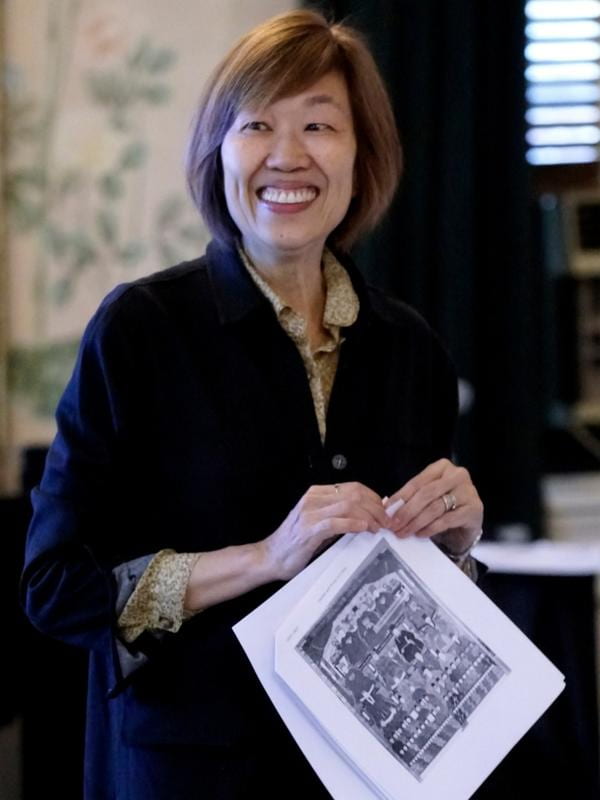
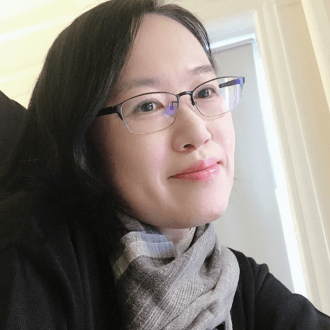
headshot of Doh Yeon Koh

Dong-Yeon Koh, an art critic, has served as a mentor and committee member in art residencies and museums in South Korea over the last two decades. She was the commissioner of the Goyang Outdoor Sculpture Festival (2017, 2018) and served as the managing committee of NaMAF (Seoul International ALT Cinema & Media Festival) (2017-2021). Dr. Koh has also published more than 40 academic essays in academic journals worldwide including Inter-Asia Journal of Cultural Studies (Routledge), Flash Art, Modern Art Asia, Photography and Culture (Routledge), and Positions (Duke University Press). Koh’s recent books are From Softpower to Goods: Alternative Forms of Exhibitions and Populist Artistic Practices in Post-1990s East Asian Art (Seoul, 2018), The Condition for Art Criticism (Seoul, 2019), and Korean War and Post-memory Generation: The Arts and Films in South Korea (London: Routledge, 2021). She is currently an adjunct lecturer at Seoul National University.

Moderator

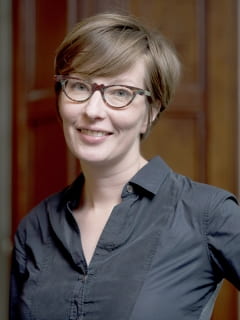
headshot of Sandra Park

Sandra H. Park is a Postdoctoral Fellow at the George Washington University Institute for Korean Studies (GWIKS). She is a historian of modern Korea, the US empire, and the global Cold War. Currently, she is working on a book manuscript, tentatively titled Anointed Citizenship: The Politics of Christian Border Crossing in Cold War Korea. Drawing on extensive archival research across government, military, and missionary archives, her book project examines the coherence of Christian moral politics as a pledge of allegiance for North Korean border crossers petitioning for citizenship in “Free” South Korea under the US military empire. Her project traces the cross-border movements of Christians and transpacific circulations of Christian political claims during and immediately after the Korean War, contributing to existing literatures on North Korean migrants and citizenship, religion and the global Cold War, and US-Korean relations in the twentieth century. As an interdisciplinary historian interested broadly in the entanglements between religion and Cold War politics in the transpacific world, Sandra’s research also extends to debates around religious freedom, the making of the US empire in Asia, and the politics of religious devotion in Korean America as well as socialist secularization in revolutionary North Korea. Her previous research on religion and the North Korean people’s court appeared in the Journal of Korean Studies.

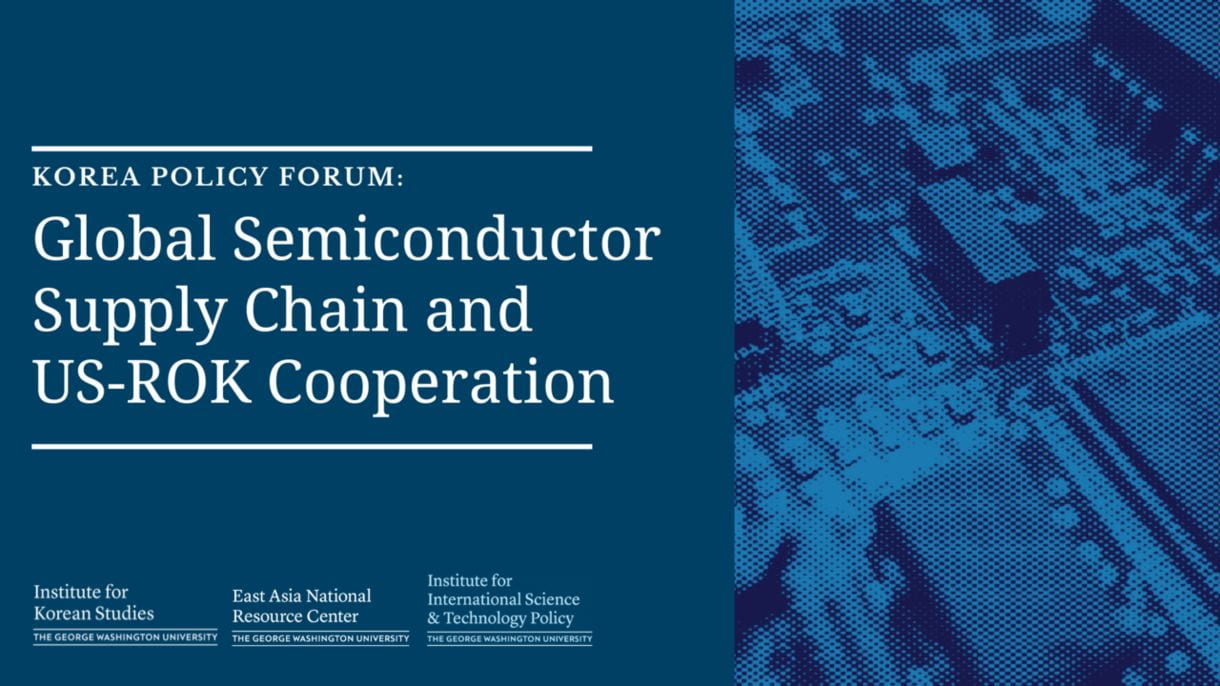
09/20/2022 | Korea Policy Forum: Global Semiconductor Supply Chain and US-ROK Cooperation

event banner for korea policy forum on semiconductors supply chain and US-Korea competition

Tuesday, September 20, 2022

9:00 AM – 10:30 AM EDT

Zoom Event

About the Event

In recent years, South Korea and the United States have stepped up their discussions and cooperation on economic security. Recognizing the vital importance of the semiconductor industry in particular, the two allies have made bolstering supply chain resilience in this sector a policy priority. In the wake of global semiconductor shortages due to the COVID-19 pandemic, safeguarding these supply chains has been brought to the forefront of policy discussions in both countries. Underscoring the importance of semiconductors to the security of both countries, South Korea and the United States agreed to strengthen their strategic economic and technology partnership at the first Biden-Yoon summit in May 2022. The two allies have since sought to deepen and broaden cooperation on critical and emerging technologies, such as leading-edge semiconductors.

Two leading experts from the U.S. and Korea, respectively, will be joining us to discuss their national economic security strategy and industrial policy regarding the global semiconductor supply chain. The GW Institute for Korean Studies and the Institute for International Science and Technology Policy invite you to join us for an engaging discussion on this important topic.

Registered guests will receive a confirmation email with details for joining the virtual event.

This event is on the record and open to the public.

Speakers

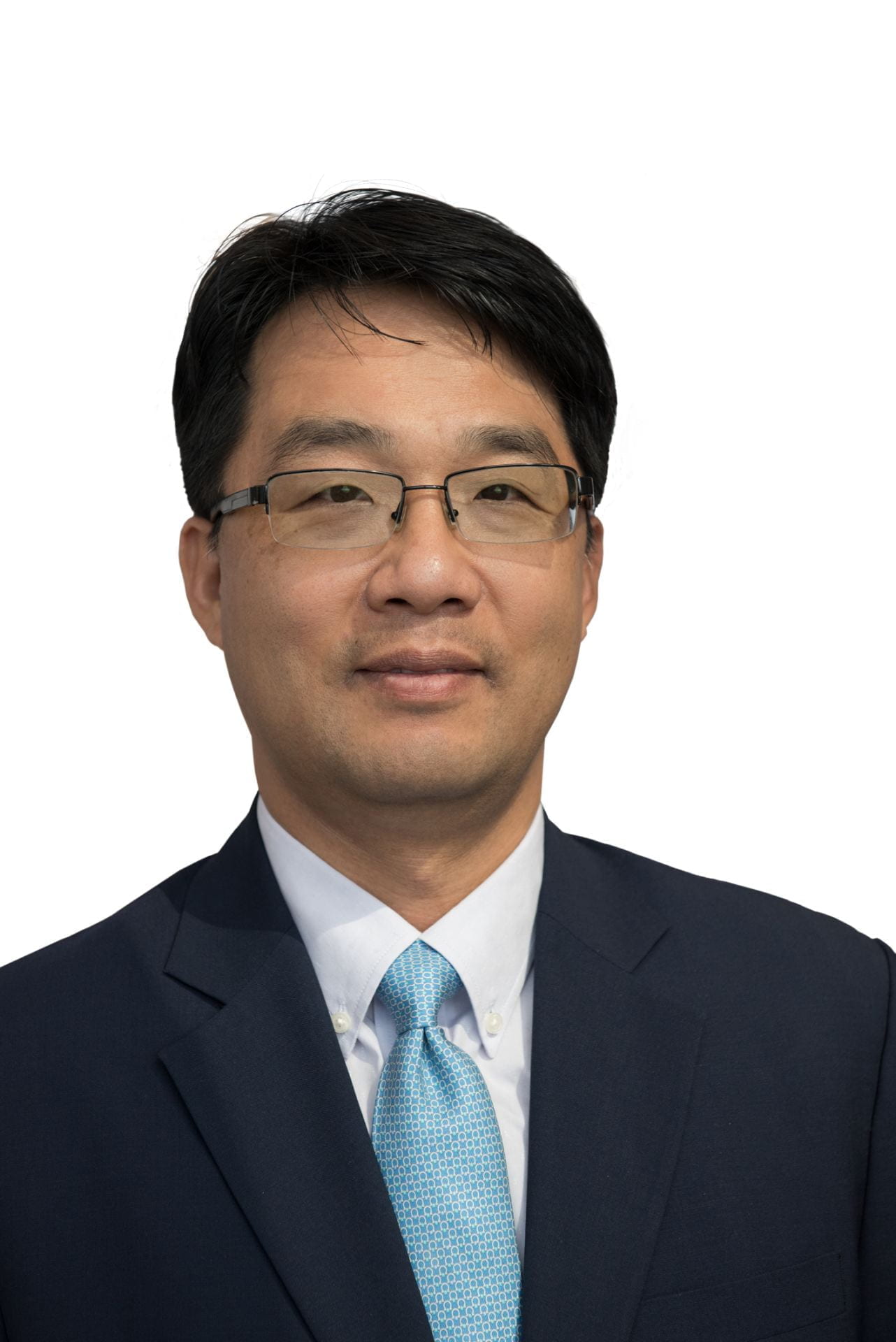
headshot of Youngja Bae

YoungJa Bae is a Professor in the Department of Political Science and Diplomacy at Konkuk University. Dr. Bae received her Ph.D. in political science at University of North Carolina at Chapel Hill and serves on the policy advisory committee to the South Korean Ministry of Foreign Affairs and vice chairman of the Korean Association of International Studies. She was a visiting scholar at National Taiwan University under Taiwan Fellowship. Her main research interests include international politics and S&T, science diplomacy, and international political economy. Her major papers include “Regulations on Foreign Direct Investment and National Security,” “US-China competition and Science and Technology Innovation,” and “S&T Diplomacy as Public Diplomacy: Theoretical Understanding.”

portrait of Jisoo Kim in professional attire

Jisoo M. Kim is Korea Foundation Associate Professor of History, International Affairs, and East Asian Languages and Literatures. She currently serves as the Director of the Institute for Korean Studies and the Co-Director of the East Asia National Resource Center at GW. She also serves as the Editor-in-Chief of the Journal of Korean Studies. She is a specialist in gender, law, and emotions in Korean history. Her broader research interests include gender and sexuality, crime and justice, forensic medicine, literary representations of the law, history of emotions, vernacular, and gender writing. She is the author of The Emotions of Justice: Gender, Status, and Legal Performance in Chosŏn Korea (University of Washington Press, 2015), which was awarded the 2017 James Palais Prize of the Association for Asian Studies. She is also the co-editor of The Great East Asian War and the Birth of the Korean Nation by JaHyun Kim Haboush (Columbia University Press, 2016). She is currently working on a book project tentatively entitled Sexual Desire, Crime, and Gendered Subjects: A History of Adultery Law in Korea. She received her M.A., M.Phil., and Ph.D. in East Asian Languages and Cultures from Columbia University.

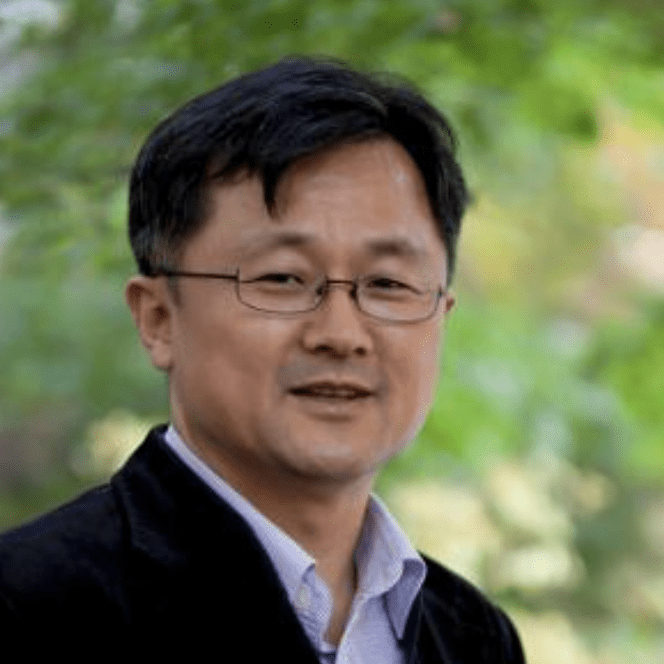
headshot of Hee Kwon Kyung

Hee Kwon Kyung is an Associate Research Fellow of KIET, Korea Institute for Industrial Economics and Trade. His recent research focuses on the economic impacts and policy implications of the conflicts between the two major powers, namely the United States and People’s Republic of China, regarding semiconductor and advanced ICT Industry. Prior to joining KIET, Kyung received a PhD from Michigan State University and two BAs from Yonsei University. His dissertation tried a combination of applied econometrics and artificial intelligence methodologies including sentiment analysis, LASSO variants, random forests, and related inference techniques developed around 2019.

headshot of Lisa J. Porter

Lisa J. Porter is the Co-Founder and Co-President of LogiQ, Inc., a company providing high-end management, scientific, and technical consulting services. She was previously the Deputy Under Secretary of Defense for Research and Engineering, and in that role, she shared responsibility with the Under Secretary for the research, development, and prototyping activities across the Department of Defense. In prior roles she served as Executive Vice President of In-Q-Tel (IQT) and Director of IQT Labs, the President of Teledyne Scientific & Imaging, the first Director of the Intelligence Advanced Research Projects Activity (IARPA) in the Office of the Director of National Intelligence (ODNI), the Associate Administrator for the Aeronautics Research Mission Directorate at NASA, and as a program manager and senior scientist at the Defense Advanced Research Projects Agency (DARPA). She holds a bachelor’s degree in nuclear engineering from the Massachusetts Institute of Technology and a doctorate in applied physics from Stanford University. She received the Office of the Secretary of Defense Medal for Exceptional Public Service, the NASA Outstanding Leadership Medal, the National Intelligence Distinguished Service Medal, the Presidential Meritorious Rank Award, and the Department of Defense Medal for Distinguished Public Service.

headshot of Nick Vonortas

Nick S. Vonortas is Professor of Economics and International Affairs at The George Washington University in Washington D.C. He is a faculty member of the Department of Economics, of the Institute for International Science and Technology Policy, and of the Trachtenberg School of Public Policy and Public Administration. He currently is Senior Associate Dean at the Elliott School of International Affairs. Nick also holds a ‘São Paulo Excellence Chair’ in Technology and Innovation Policy at the University of Campinas, São Paulo, Brazil. His teaching and research interests are in industrial organization, in the economics of technological change, and in technology and innovation policy and strategy. He is editor of the peer-reviewed journal Science and Public Policy. Nick holds a Ph.D. and M.Phil. in Economics from New York University (USA), a MA in Economic Development from Leicester University (UK), and a BA in Economics from the National and Kapodistrian University of Athens (Greece).

headshot of Shahid Yusuf

Shahid Yusuf is Chief Economist of The Growth Dialogue at the George Washington University, School of Business in Washington DC; and a Non-Resident fellow of the Center for Global Development in Washington DC; Prior to joining the Growth Dialogue, he was on the staff of the World Bank. Dr. Yusuf has written extensively on development issues, urbanization, and technological change. His current areas of interest are supply chains and topics related to climate change with a focus on the East Asian region. Dr. Yusuf has authored or edited more than twenty-five books and has published widely in various academic journals.

Moderator

portrait of Yonho Kim in professional attire

Yonho Kim is an Associate Research Professor of Practice and the Associate Director of GW Institute for Korean Studies. He specializes in North Korea’s mobile telecommunications and U.S. policy towards North Korea. Kim is the author of North Korean Phone Money: Airtime Transfers as a Precursor to Mobile Payment System (2020), North Korea’s Mobile Telecommunications and Private Transportation Services in the Kim Jong-un Era (2019) and Cell Phones in North Korea: Has North Korea Entered the Telecommunications Revolution? (2014). His research findings were covered by various media outlets, including Wall Street Journal, The Atlantic, Yonhap News, and Libération. Prior to joining GWIKS, he extensively interacted with the Washington policy circle on the Korean peninsula as Senior Researcher of the U.S.-Korea Institute at Johns Hopkins University School of Advanced International Studies, Senior Reporter for Voice of America’s Korean Service, and Assistant Director of the Atlantic Council’s Program on Korea in Transition. He holds a B.A. and M.A. in International Relations from Seoul National University, and an M.A. in International Relations and International Economics from Johns Hopkins University School of Advanced International Studies.

logo of the GW Institute for Korean Studies in English
logo of the GW East Asia National Resource Center
logo of the GW Institute for International Science and Technology Policy

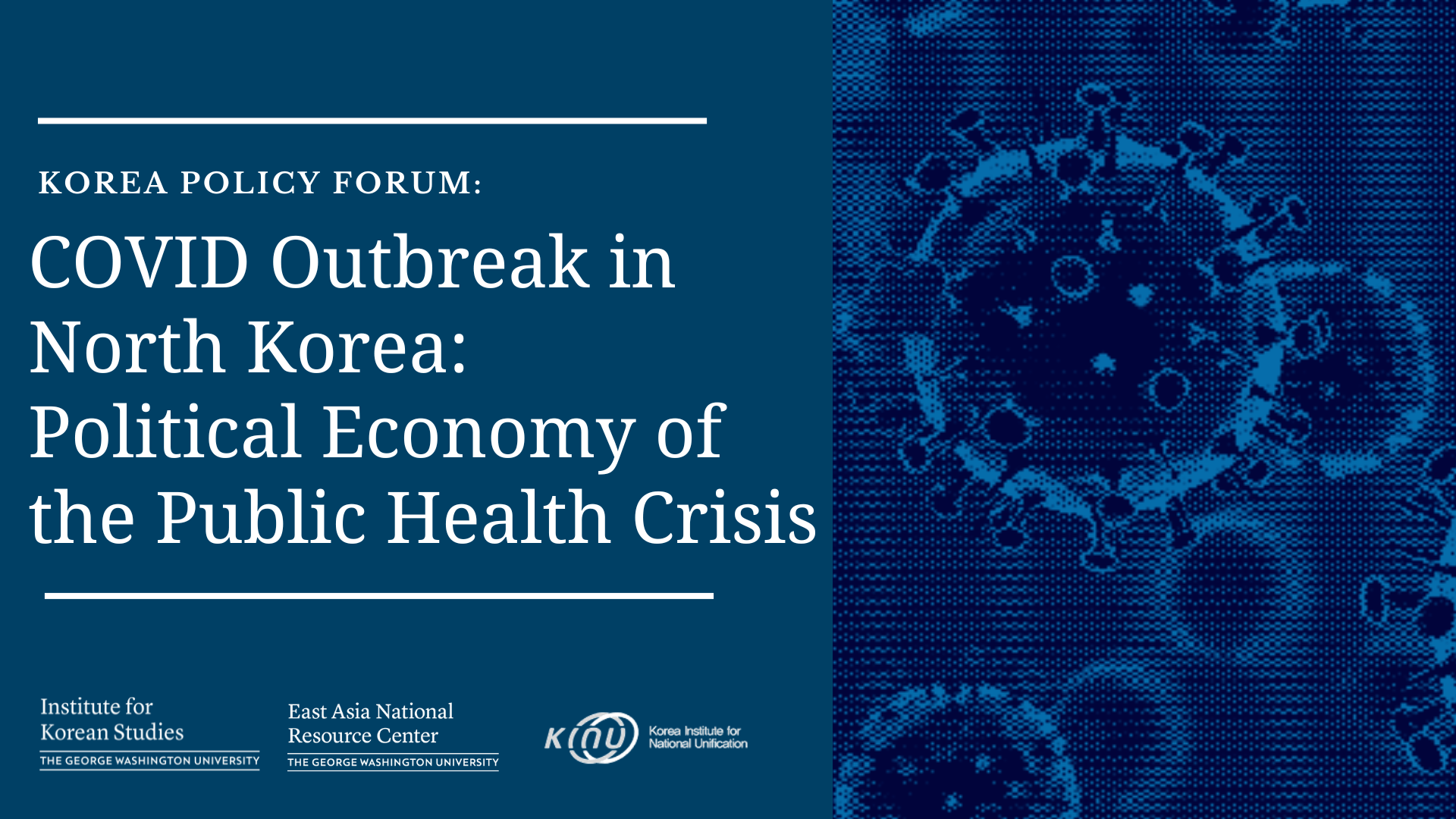
06/20/22 | Korea Policy Forum, COVID Outbreak in North Korea: Political Economy of the Public Health Crisis

Flyer for Korea Policy Forum on the COVID outbreak in North Korea

Monday, June 20, 2022

8:00 PM – 9:30 PM EDT

Zoom Event

Recording [ENGLISH VERSION]

Recording [KOREAN VERSION]

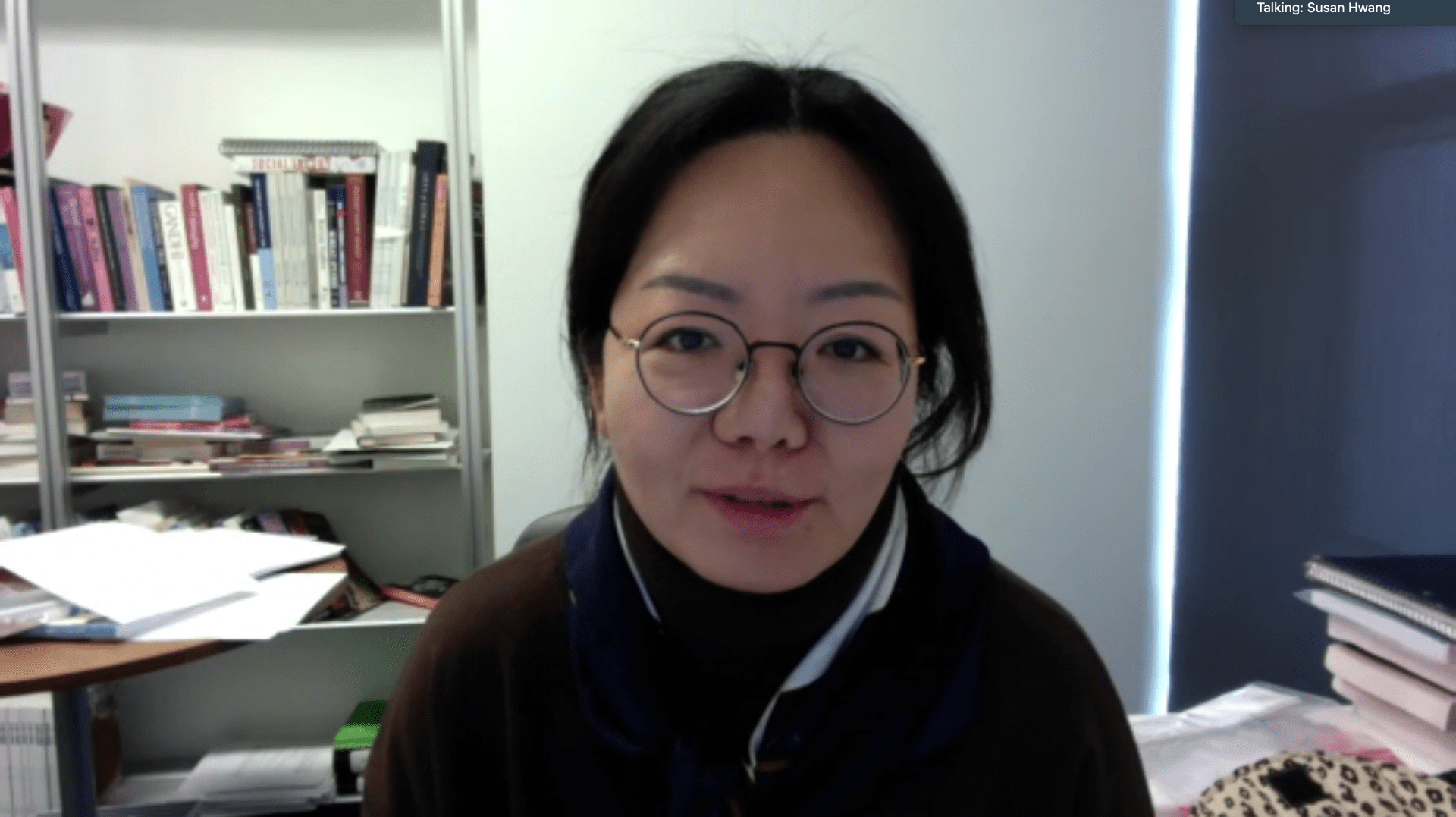
Since the start of the COVID-19 pandemic in 2020, North Korea has enforced one of the world’s most strict “Zero-COVID” policies. With its sealed borders and severely limited international trade, North Korea claimed for over two years that there were no positive COVID-19 cases in the country. While many doubted the veracity of these claims, North Korea was one of the last countries with no official reported cases. This all changed in May 2022 when state media officially confirmed that cases had indeed entered North Korea and that country was in the midst of an Omicron outbreak.

As North Korea now struggles to keep this new outbreak under control, many questions have arisen on the government’s capability to handle a public health crisis of this magnitude. How will North Korea react to this new outbreak and what does this mean for the political and economic stability of North Korea? We invite you to join the GW Institute for Korean Studies and the Korea Institute for National Unification for an online discussion on the impact of this latest crisis in North Korea.

Speakers

headshot of William B Brown

William B. Brown (Bill) is Chair of the North Korea Economic Forum at the GW Institute for Korean Studies (GWIKS). He is also principal of his consulting company, Northeast Asia Economics and Intelligence Advisory, LLC (NAEIA.com) and is a member of the Board of Directors of the Korea Economic Institute of America. He also teaches courses on Contemporary China for University of Maryland Global Campus. Brown served a career in the federal government, working as an economist and East Asia specialist at the Central Intelligence Agency, Commerce Department, and National Intelligence Council (NIC). At the NIC, he served as Senior Research Fellow for East Asia and as Deputy National Intelligence Officer for Economics. His most recent service was as Senior Advisor to the National Intelligence Manager for East Asia in the Office of the Director of National Intelligence. Mr. Brown’s research is focused on the North Korean and Chinese economies and he is widely quoted in national and Korean media, especially with Voice of America. His publications include “Money and Markets in North Korea,” an unclassified study for the National Intelligence Council, and the “Economics of Korean Unification” published by the Council of Foreign Relations.

headshot of Ken Gause

Ken Gause is the Director of the Adversary Analytics Program at the CNA Corporation. His team is responsible for doing deep dive studies on the leadership/decision-making, armed forces, military doctrine, and capabilities of US adversaries. Mr. Gause began his career as a Sovietologist for the US government in the 1980s and has worked in think tanks since the late 1980s. He is a noted expert on North Korean leadership and is the author of several books on the topic.

headshot of Jea Hwan Hong

Jea Hwan Hong is a Research Fellow of the North Korean Research Division at the Korea Institute for National Unification (KINU). He received his Ph.D. in Economics from Seoul National University. He served as the Director of the North Korean Research Division in 2021. Since 2016, he has researched the North Korean economy and inter-Korean economic cooperation at KINU. Major publications include North Korean Economy in the
Kim Jong-un Era: Economic Policy, Foreign Trade, and People’s Lives (2021, Co-author), Demographic Change in North Korea: Trends, Determinants, and Prospects (2020, Coauthor), Inter-Korean Economic Cooperation: Development Potential and Policy Implications (2019, Co-author), and Livelihoods in North Korea and Cooperation Plan (2018, Co-author) (all in Korean).

portrait of Jisoo Kim in professional attire

Jisoo M. Kim is Korea Foundation Associate Professor of History, International Affairs, and East Asian Languages and Literatures. She currently serves as the Director of the Institute for Korean Studies and the Co-Director of the East Asia National Resource Center at GW. She also serves as the Editor-in-Chief of the Journal of Korean Studies. She is a specialist in gender, law, and emotions in Korean history. Her broader research interests include gender and sexuality, crime and justice, forensic medicine, literary representations of the law, history of emotions, vernacular, and gender writing. She is the author of The Emotions of Justice: Gender, Status, and Legal Performance in Chosŏn Korea (University of Washington Press, 2015), which was awarded the 2017 James Palais Prize of the Association for Asian Studies. She is also the co-editor of The Great East Asian War and the Birth of the Korean Nation by JaHyun Kim Haboush (Columbia University Press, 2016). She is currently working on a book project tentatively entitled Sexual Desire, Crime, and Gendered Subjects: A History of Adultery Law in Korea. She received her M.A., M.Phil., and Ph.D. in East Asian Languages and Cultures from Columbia University.

headshot of Yu Hwan Koh

Yu-hwan Koh is the 18th President of Korea Institute for National Unification (KINU). He earned a Ph.D. in political science from Dongguk University in 1991. As an expert in areas of unification, North Korea, and inter-Korean relations, he was a professor in the Department of North Korean Studies at Dongguk University (1994~2020), Director of Institute for North Korean Studies at Dongguk University (2009~2020), a visiting scholar of Walter H. Shorenstein Asia-Pacific Research Center at Stanford University (2010~2011), President of Korean Association of North Korean Studies (2012), Chair of the Peace and Prosperity Sub-committee of Presidential Commission on Policy Planning (2017~2019)/member (~2020), and a member of the experts advisory group for the inter-Korean summit (2018). Currently, he is the Chair of the Planning and Coordination Committee at National Unification Advisory Council (2017~), Chair of the Planning and Coordination Committee at National Unification Advisory Council (2017~), and Chair of the Korean Peninsula Sub-committee at Policy Advisory Committee of the Ministry of Foreign Affairs (2018~). Major publications include Peace on the Road to Unification (2019) (in Korean), 70 Years of Division Viewed through the Lens of Inter-Korean Military Conflicts (2018) (in Korean), Actor-Network and Performativity of Divided Korea (2015) (in Korean), New Paradigm of North Korean Studies (2015) (in Korean), An Introduction to the Research of North Korean Cities (2012) (in Korean), Resolutions to North Korea’s Nuclear Issues and Establishment of a Peace Regime on the Korean Peninsula (2003) (in Korean), Troubled Transition: North Korea’s Politics, Economy, and External Relations (2013)(in English).

headshot of Rachel Minyoung Lee

Rachel Minyoung Lee is the Regional Issues Manager and Senior Analyst for Open Nuclear Network (ONN), a program of One Earth Future, where she oversees the creation and development of ONN’s strategic network and works closely with the analytical team to identify strategies and products that can best meet the needs of partners and consumers. Rachel is also a Nonresident Fellow with the 38 North Program at the Stimson Center. She was a North Korea collection expert and analyst with the US Government from 2000 to 2019. During that time, she wrote on the gamut of North Korean issues, from leadership, domestic politics and economy, and foreign policy, to social and cultural developments. As Analysis Team Lead, Rachel led a team of collection officers and analysts to track and analyze North and South Korean issues with implications for Pyongyang’s regime stability and regional security.

headshot of Wootae Lee

Wootae Lee is a director of Humanitarian and Cooperation Research Division at Korea Institute for National Unification (KINU). He simultaneously serves as an advisor to Center for NK Human Rights Records, Ministry of Unification. His research interests include inter-Korean exchange and cooperation and foreign policy analysis. He earned his B.A. from Inha University, his M.A. from New York University, and his Ph.D. in Political Science from University of Georgia. Before joining KINU, he served a research professor at the Center for International Studies at Inha University, South Korea.

Moderator

portrait of Yonho Kim in professional attire

Yonho Kim is an Associate Research Professor of Practice and the Associate Director of GW Institute for Korean Studies. He specializes in North Korea’s mobile telecommunications and U.S. policy towards North Korea. Kim is the author of North Korean Phone Money: Airtime Transfers as a Precursor to Mobile Payment System (2020), North Korea’s Mobile Telecommunications and Private Transportation Services in the Kim Jong-un Era (2019) and Cell Phones in North Korea: Has North Korea Entered the Telecommunications Revolution? (2014). His research findings were covered by various media outlets, including Wall Street Journal, The Atlantic, Yonhap News, and Libération. Prior to joining GWIKS, he extensively interacted with the Washington policy circle on the Korean peninsula as Senior Researcher of the U.S.-Korea Institute at Johns Hopkins University School of Advanced International Studies, Senior Reporter for Voice of America’s Korean Service, and Assistant Director of the Atlantic Council’s Program on Korea in Transition. He holds a B.A. and M.A. in International Relations from Seoul National University, and an M.A. in International Relations and International Economics from Johns Hopkins University School of Advanced International Studies.

logo of the GW Institute for Korean Studies in English
logo of the GW East Asia National Resource Center
logo of the korean institute for national unification

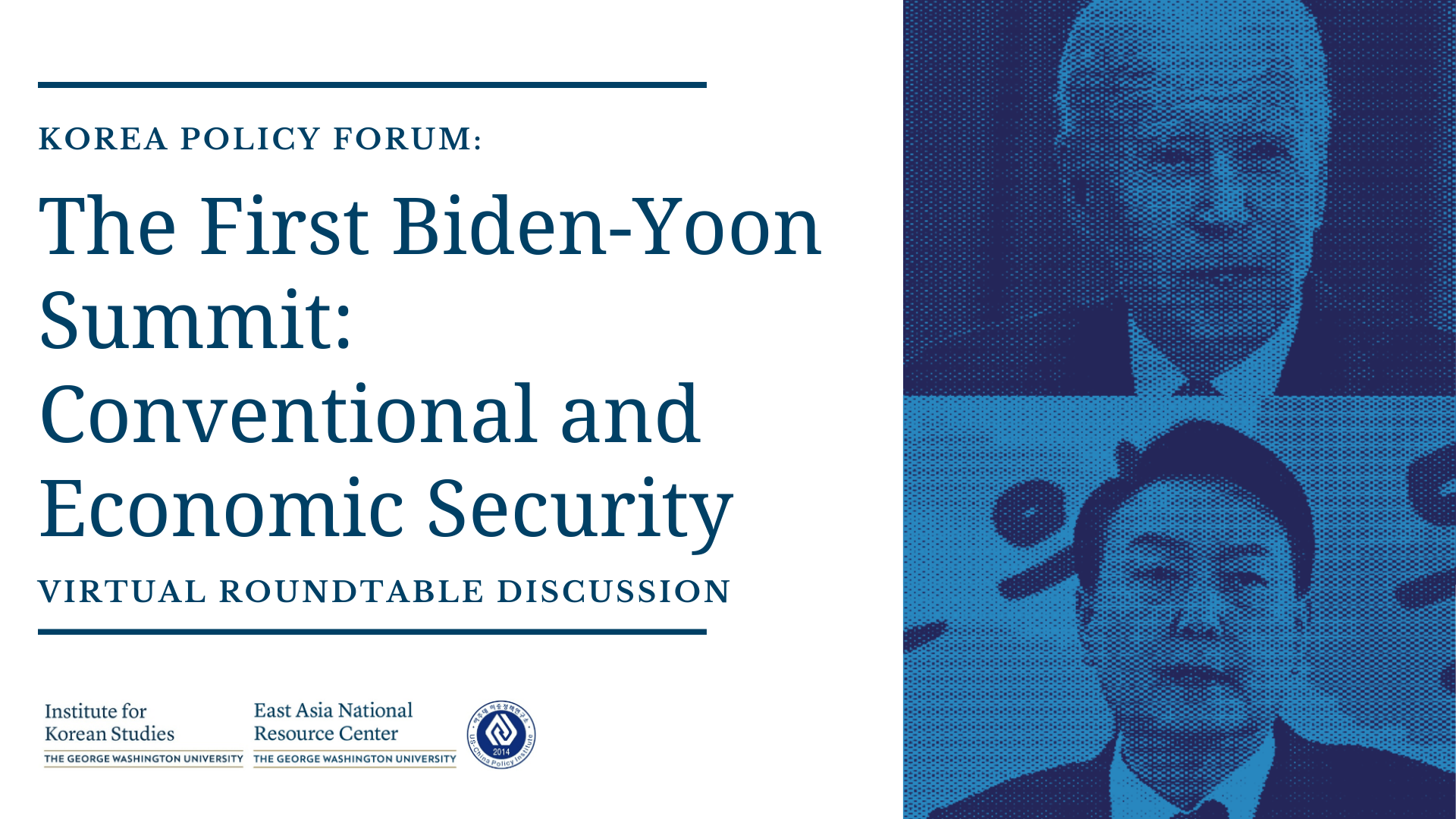
05/17/2022 | Korea Policy Forum: The First Biden-Yoon Summit: Conventional and Economic Security

event banner for the The First Biden-Yoon Summit: Conventional and Economic Security event

Korea Policy Forum

The First Biden-Yoon Summit: Conventional and Economic Security

Tuesday, May 17, 2022

9:00 AM – 10:30 AM EDT

Zoom Event

U.S. President Joseph Biden and South Korean President Yoon Suk-yeol will have their first summit meeting on May 21. With the conflict in Ukraine and U.S.-China relations facing a crucial point, the new Yoon government must navigate a new diplomatic and economic landscape in the regional and global contexts. Amid the uncertain international dynamics, North Korea’s recent tests of an advanced missile system and the potential for a new nuclear test pose an even greater challenge to the two allies. The upcoming U.S.-ROK summit will shed a light on the pressing need for a cooperative approach to these challenges. Please join the GW Institute for Korean Studies for an online discussion with experts who will be discussing views from the United States and South Korea on conventional and economic security for the alliance.

Registered guests will receive a confirmation email with details for joining the virtual event.

This event is on the record and open to the public.

Speakers

portrait of Gregg Brazinsky in professional attire

Gregg A. Brazinsky is Professor of History and International Affairs and Deputy Director of the Institute for Korean Studies at GW. He also serves as Director of the Asian Studies Program at the Elliott School of International Affairs. His research seeks to understand the diverse and multifaceted interactions among East Asian states and between Asia and the United States. He is the author of Nation Building in South Korea: Koreans, Americans, and the Making of a Democracy (University of North Carolina Press, 2007) and Winning the Third World: Sino-American Rivalry during the Cold War (University of North Carolina Press, 2017). He served as Interim Director of the GW Institute for Korean Studies during the Spring 2017 semester. He received his Ph.D. from Cornell University.

headshot of Du Hyeong Cha

Du Hyeong Cha is a North Korea study expert who has completed various research projects on topics such as North Korean politics and military, U.S.-ROK alliance, and national crisis management. He is the Principal Fellow of the Asan Institute for Policy Studies, holding an additional post as Visiting Professor at the Graduate Institute of Peace Studies at Kyung Hee University. He also has served as an Adjunct Professor at the University of North Korean Studies (2017-2019), Senior Foreign Affairs Advisor to the Governor of Gyeonggi Provincial Government (2015-2018), Visiting Scholar at the Korea Institute for National Unification (2015-2017), and the Executive Vice President of the Korea Foundation (2011-2014). He was also a Research Fellow at the Korea Institute for Defense Analyses (KIDA, 1989-2012) and the Acting Secretary for Crisis Information to ROK President Lee Myung Bak (2008). He has worked for more than 20 years at KIDA in various positions including Director of the Defense Issues Task Force (2005-2006), Director of Arms Control Research (2007), and Director of North Korea Studies (2009). Dr. Cha received his M.A. and Ph.D. in Political Science from Yonsei University. He has written more than 100 research papers and co-authored books on diverse fields of security and international relations. He has advised for various governmental organizations.

headshot of Seonjou Kang

Seonjou Kang is a Professor at the Korea National Diplomatic Academy-Institute of Foreign Affairs and National Security (KNDA-IFANS). Her research centers on rules-based international order/global governance, geo-economics of Asian regionalism, and middle power diplomacy. Her widely cited in-house papers include “G7 Summit 2021 and the Post-Pandemic International Order,” “Global Response to COVID-19: Politicization of Infectious Diseases and Decline of Global Cooperation,” “U.S.-China Competition for Monetary Finance Hegemony,” “The U.S. Indo-Pacific Strategy as Geo-economics,” “U.S. President-Elect Trump’s Foreign Economic Policies: Their Feasibility and Implications,” “Two-Year Performance Assessment of the Asian Infrastructure Investment Bank: China’s Economic Statecraft or a Multilateral Development Bank?”. She also published academic research in Korean Journal of International Studies (2020, 2015), European Journal of Political Research (2007), The Journal of Politics (2005), and Journal of Peace Research (2004). She received her Ph.D. in political science from Michigan State University in 2000. Her other degrees are a B.A. in international relations and an M.A. in political science both from Seoul National University in Korea.

headshot of Heung-Kyu Kim

Heung-Kyu Kim is the founder and Director of U.S.-China Policy Institute and professor in the Department of Political Science at Ajou University. He also served as a professor at the Institute of Foreign Affairs and National Security in South Korea’s Ministry of Foreign Affairs. His current assignments include Policy Advisory Board Member for the Ministry of National Defense and ROK Army and Chairman of the Foreign Ministry’s Reform Commission. He also served as Director of Foreign Affairs Subcommittee on the Presidential Commission on Policy Planning, Team Leader of Security and Defense in the Presidential Task Force of Future Vision 2045, a board member of the National Security Council and a board member of National Defense Reform Commission. Dr. Kim’s publications include China and the U.S.-ROK Alliance: Promoting a Trilateral Dialogue (CFR, 2017), Enemy, Homager or Equal Partner?: Evolving Korea-China Relations (2012), From a Buffer Zone to a Strategic Burden: Evolving Sino-North Korea Relations during Hu Jintao Era (2010). His book China’s Central-Local Relations and Decision-Making received an award for Excellency of the Year by the Ministry of Culture in 2008. He also received the NEAR Foundation Academic prize of the year in the area of foreign policy and security in 2014. Kim received his BA and MA in international relations from Seoul National University and Ph.D. in Political Science from the University of Michigan.

portrait of Jisoo Kim in professional attire

Jisoo M. Kim is Korea Foundation Associate Professor of History, International Affairs, and East Asian Languages and Literatures. She currently serves as the Director of the Institute for Korean Studies and the Co-Director of the East Asia National Resource Center at GW. She also serves as the Editor-in-Chief of the Journal of Korean Studies. She is a specialist in gender, law, and emotions in Korean history. Her broader research interests include gender and sexuality, crime and justice, forensic medicine, literary representations of the law, history of emotions, vernacular, and gender writing. She is the author of The Emotions of Justice: Gender, Status, and Legal Performance in Chosŏn Korea (University of Washington Press, 2015), which was awarded the 2017 James Palais Prize of the Association for Asian Studies. She is also the co-editor of The Great East Asian War and the Birth of the Korean Nation by JaHyun Kim Haboush (Columbia University Press, 2016). She is currently working on a book project tentatively entitled Sexual Desire, Crime, and Gendered Subjects: A History of Adultery Law in Korea. She received her M.A., M.Phil., and Ph.D. in East Asian Languages and Cultures from Columbia University.

headshot of Tami Overby

Tami Overby is President of Asia Pathfinders where she advises clients on Asia and trade matters, with a particular focus on Korea. Ms. Overby has over three decades of Asia work, including 21 years living and working in Seoul. Her most recent experiences include four years with McLarty Associates and eight years leading the US Chamber of Commerce’s Asia team while also serving as President of the US Korea Business Council. Ms. Overby’s extensive experience helps American companies compete and prosper in Asia. She worked on the TransPacific Partnership FTA, APEC and the KORUS FTA. Ms. Overby’s extensive Asia experience includes working on both high-profile trade disputes with our government and our Asian trade partners as well on market access and investment issues throughout the region. Ms. Overby sits on the board of The Korea Society as well as the Korea Economic Institute’s Advisory Council and the US-Asia Institute. She received her BS in Business Administration and Management from the University of Arkansas.

Moderator

portrait of Yonho Kim in professional attire

Yonho Kim is an Associate Research Professor of Practice and the Associate Director of GW Institute for Korean Studies. He specializes in North Korea’s mobile telecommunications and U.S. policy towards North Korea. Kim is the author of North Korean Phone Money: Airtime Transfers as a Precursor to Mobile Payment System (2020), North Korea’s Mobile Telecommunications and Private Transportation Services in the Kim Jong-un Era (2019) and Cell Phones in North Korea: Has North Korea Entered the Telecommunications Revolution? (2014). His research findings were covered by various media outlets, including Wall Street Journal, The Atlantic, Yonhap News, and Libération. Prior to joining GWIKS, he extensively interacted with the Washington policy circle on the Korean peninsula as Senior Researcher of the U.S.-Korea Institute at Johns Hopkins University School of Advanced International Studies, Senior Reporter for Voice of America’s Korean Service, and Assistant Director of the Atlantic Council’s Program on Korea in Transition. He holds a B.A. and M.A. in International Relations from Seoul National University, and an M.A. in International Relations and International Economics from Johns Hopkins University School of Advanced International Studies.

logo of the GW Institute for Korean Studies in English
logo of the GW East Asia National Resource Center
logo of the Elliott School of International Affairs at GW
Ajou University US China Policy Institute logo

5/6/2022 – 5/7/2022 GWIKS Annual Signature Conference

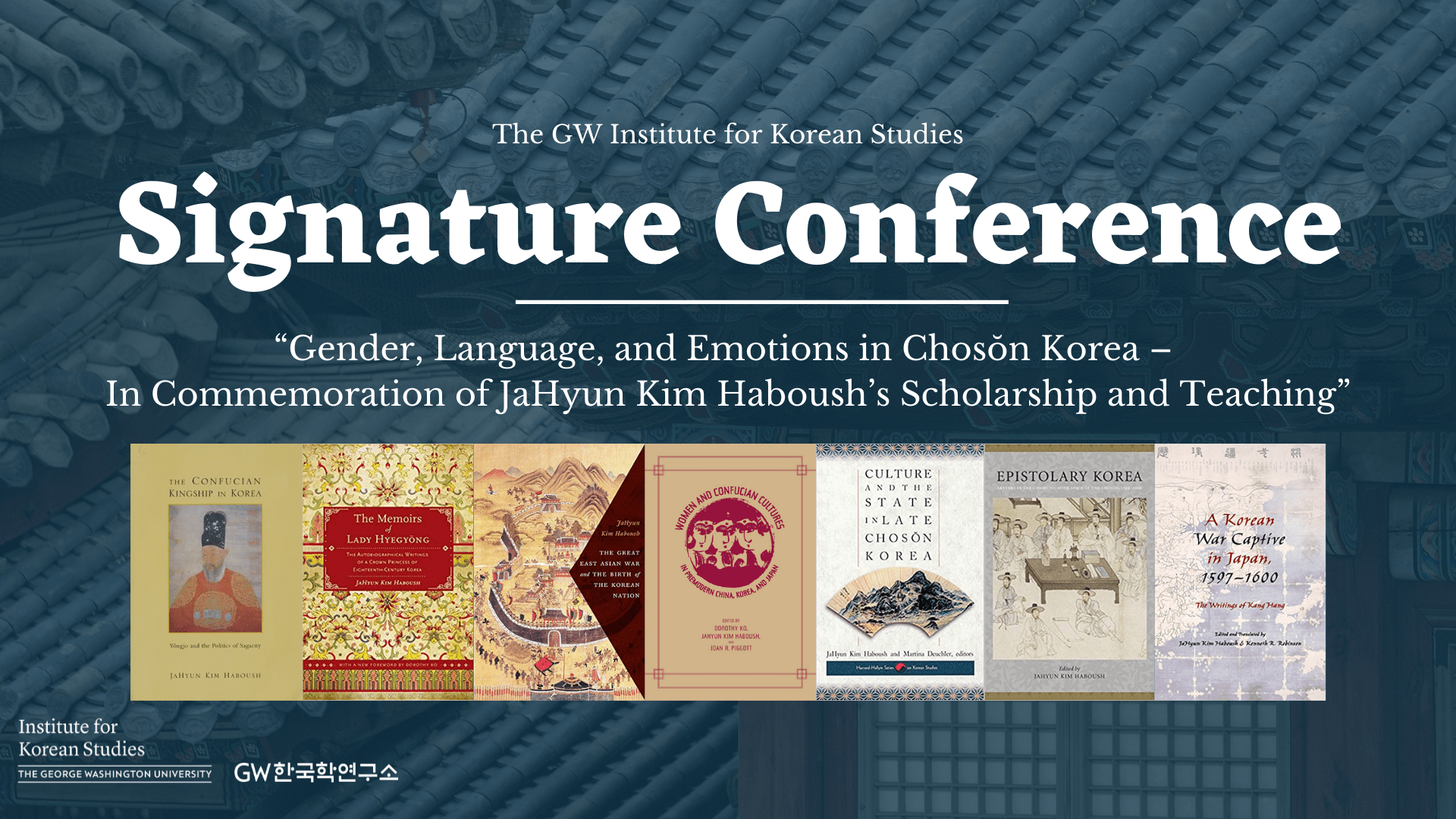
gwiks 2022 signature conference banner

Gender, Language, and Emotions in Chosŏn Korea – In Commemoration of JaHyun Kim Haboush’s Scholarship and Teaching

May 6, 2022

8:30 AM – 4:00 PM EDT | 9:30 P.M. – 5:00 A.M. KST

Elliott School of International Affairs, Room 212 AND Online via Zoom

May 7, 2022

8:30 AM – 11:45 AM EDT | 9:30 PM – 12:45 AM KST

Elliott School of International Affairs, Lindner Family Commons, Room 602 AND Online via Zoom

NOTE: All non-GW affiliated attendees attending the event IN-PERSON must comply with GW’s COVID-19 policy in order to attend this event, including showing proof of vaccination. While masks are no longer required, it is highly encouraged indoors. For frequently asked questions, please refer to GW’s guidance.

Event Description

In order to remember the tenth anniversary of Professor JaHyun Kim Haboush’s death in 2021, the GW Institute for Korean Studies has organized a signature conference to convene scholars of Chosŏn history and literature to commemorate Haboush’s scholarship and teaching. During the past two decades, scholars inspired by Haboush’s scholarship expanded the Chosŏn field by exploring relatively understudied areas such as gender, emotions, epistolary practices, vernacular language, and military history. On the first day of the conference, scholars will present their research that reflects Haboush’s scholarship. On the second day of the conference, two roundtable discussions will focus on Haboush’s scholarship and teaching. By bringing scholars from North America, Europe, South Korea, and Taiwan, the conference also aims to revisit the state of the field and examine new approaches to researching and teaching Chosŏn Korea.
Keynote Speakers

Marion Eggert
Professor of Korean Studies, Ruhr University Bochum

headshot of Marion Eggert

Dorothy Ko
Professor of History at Barnard College, Columbia University

portrait of Dorothy Ko holding papers

Speakers

Ksenia Chizhova
Assistant Professor of Korean Literature and Cultural Studies, Princeton University

headshot of Ksenia Chizhova

Key-Sook Choe
Professor of Korean Literature at the Institute of Korean Studies, Yonsei University

headshot of Key-Sook Choe

Byung-Sul Jung
Professor of Korean Literature, Seoul National University

headshot of Byung-Sul Jung

Ji-Young Jung
Professor of Women’s Studies, Ewha Womans University

headshot of Ji-Young Jung

Jisoo M. Kim
KF Associate Professor of History, International Affairs, and East Asian Languages and Literatures, George Washington University

portrait of Jisoo Kim in professional attire

Suyoung Son
Associate Professor in the Department of Asian Studies, Cornell University

headshot of Suyoung Son

Hyun Suk Park
Assistant Professor of Korean Literature, University of California, Los Angeles

headshot of Hyun Suk Park

Scholarship Discussants

Martina Deuchler
Emerita Professor of Korean Studies at SOAS, University of London

headshot of martina deuchler

Masato Hasegawa
Assistant Professor of History, National Taiwan University

headshot of Masato Hasegawa

George Kallander
Professor of History, Syracuse University

headshot of George Kallander

Jungwon Kim
King Sejong Associate Professor of Korean Studies, Columbia University

headshot of Jungwon Kim

Young-Key Kim-Renaud
Professor Emeritus of Korean Language and Culture and International Affairs, George Washington University

portrait of Young-Key Kim-Renaud in professional attire

Boudewijn Walraven
Professor Emeritus of Korean Language and Literature, Leiden University

headshot of boudewijn walraven

  		The GW Institute for Korean Studies Signature Conference image

 		The GW Institute for Korean Studies Signature Conference image

Pedagogy Discussants (Left to Right)

-Li Chen, Associate Professor of History and Law, University of Toronto

-Hwisang Cho, Assistant Professor of Korean Studies, Emory University

-Eleanor Hyun, Associate Curator for Korean Art, The Metropolitan Museum of Art

-Janet Yoon-Sun Lee, Associate Professor of Korean Literature, Keimyung University

-Sixiang Wang, Assistant Professor of Korean History, University of California, Los Angeles

GW Institute for Korean Studies official logo with transparent background
logo of the Elliott School of International Affairs at GW

2/9/2022 | North Korea Economic Forum: Delving into Kim Jong-un’s Ten Years

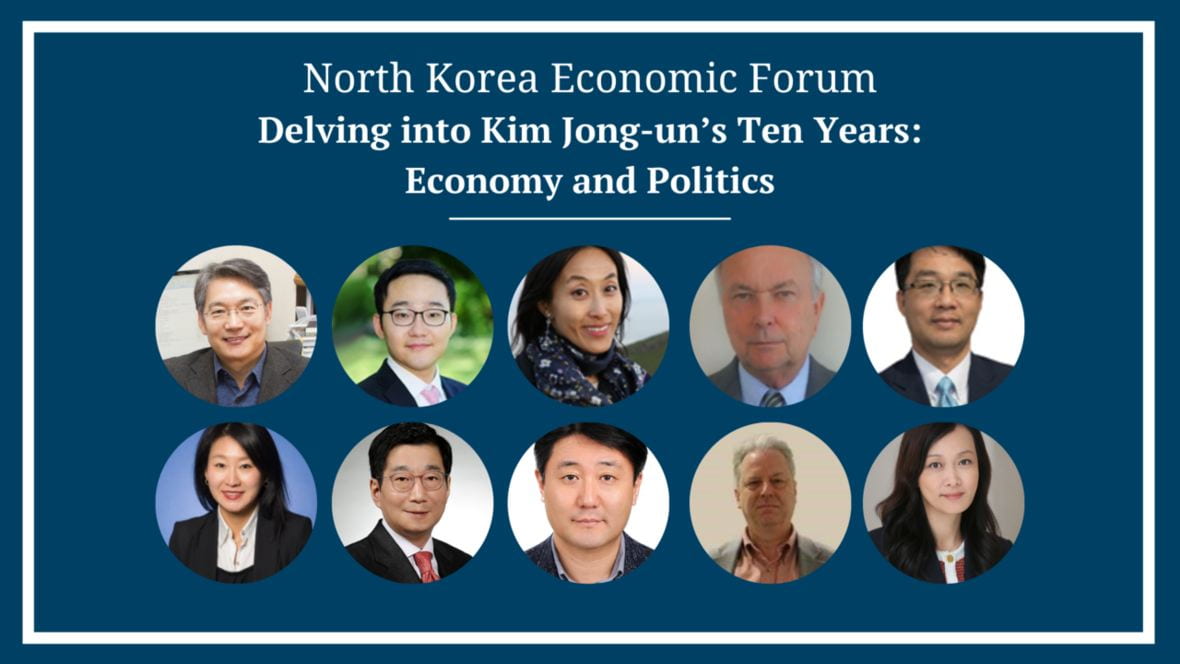
event banner with speaker headshots; text: NK Economic Forum: Delving into Kim Jong-un’s Ten Years

Wednesday, February 9, 2022

8:30 AM – 10:30 AM EST | 10:30 PM – 12:30 AM KST

Zoom Event

event agenda for the NK Economic Forum: Delving into Kim Jong-un’s Ten Years event

Ten years have passed since Kim Jong-un became the leader of North Korea in his late twenties. Despite initial expectations for possible instability in North Korea, Kim appears to be a politically competent leader capable of maintaining his power fairly well. However, he is currently facing serious obstacles to realizing his ambitions of making North Korea into a nuclear power state and developing a prosperous economy. This timely webinar invites renowned South Korean and American experts on North Korea’s economy and politics to investigate the current internal situation and to evaluate political economy dynamics in North Korea.
If you have a question for the speakers, please submit it when you complete the guest registration.

Registered guests will receive confirmation email with details for joining the Zoom event.

This event is on the record and open to the public.

For information on speakers, please check the event program.


North Korea Economic Forum Background

The North Korea Economic Forum (NKEF) is part of the policy program at the George Washington University’s Institute for Korean Studies (GWIKS). The Forum aims to promote the understanding of North Korean economic issues, distribute the well-balanced, deeply touched, and multi-dimensionally explored pictures of North Korean economy and to expand the network among the various North Korean economy watchers. The Forum is mostly a closed and off-the-record meeting where participants can freely and seriously discuss the critical issues. Mr. William Brown is currently the chair of the NKEF and is leading the meetings. It also organizes special conferences made public throughout the academic year. The Forum is made possible by a generous grant provided by the KDI School of Public Policy and Management.

logos of the GW Institute for Korean Studies and Elliott School of International Affairs
Institute for Peace and Unification Studies logo