
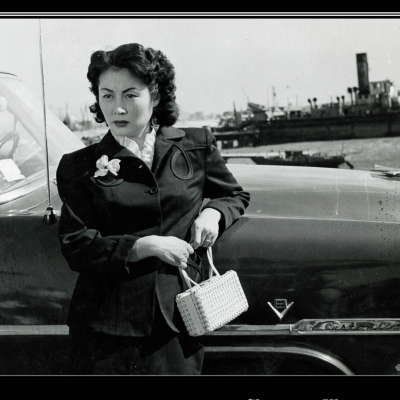
Soh Jaipil Lecture Series
Speaker
Christina Klein, Associate Professor of English and Director of American Studies, Boston College
Moderator
Immanuel Kim, Korea Foundation and Kim-Renaud Associate Professor of Korean Literature and Culture Studies,
the George Washington University
Date&Time
Friday, October 30, 2020
2:00 p.m. – 3:30 p.m.
Virtual Event
Event Description
South Korea in the 1950s was home to a burgeoning film culture, one of the many “Golden Age cinemas” that flourished in Asia during the postwar years. Cold War Cosmopolitanism offers a transnational cultural history of South Korean film style in this period, focusing on the works of Han Hyung-mo, director of the era’s most glamorous and popular women’s pictures, including the blockbuster Madame Freedom (1956). Christina Klein provides a unique approach to the study of film style, illuminating how Han’s films took shape within a “free world” network of aesthetic and material ties created by the legacies of Japanese colonialism, the construction of US military bases, the waging of the cultural Cold War, the forging of regional political alliances, and the import of popular cultures from around the world.
Speaker
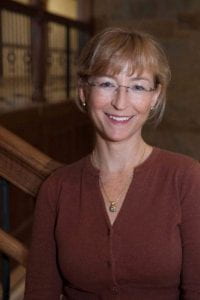 Christina Klein holds a BA in Film Studies from Wesleyan and Ph.D. in American Studies from Yale. In addition to her new book, Cold War Cosmopolitanism, which was just published by the University of California Press, she is the author of Cold War Orientalism: Asia in the Middlebrow Imagination, 1945-1961 (California, 2003). Her articles on Korean and other Asian cinemas have been published in The Journal of Korean Studies, Transnational Cinemas, American Quarterly, Journal of Chinese Cinemas, Comparative American Studies, and Cinema Journal. She teaches film, English, and American Studies at Boston College.
Moderator
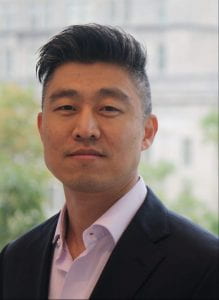 Immanuel Kim is Korea Foundation and Kim-Renaud Associate Professor of Korean Literature and Culture Studies. Prior to working at the George Washington University, he was Assistant Professor in the Department of Asian and Asian American Studies at Binghamton University (SUNY). Dr. Kim received his Ph.D. from the University of California, Riverside. He is an authority on North Korean literature and film and is the author of a recent book on North Korean literature, Rewriting Revolution: Women, Sexuality, and Memory in North Korean Fiction (University of Hawaii Press, 2018).


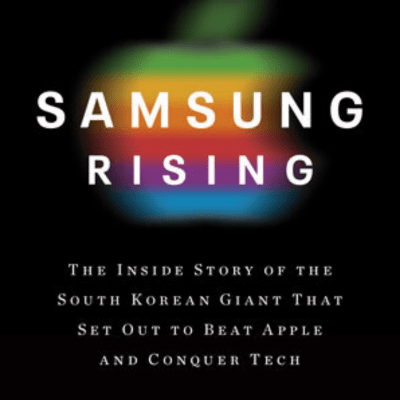
 Geoffrey Cain, ESIA BA ’08, is a foreign correspondent and author who has covered Asia and technology for The Economist, The Wall Street Journal, Time, The New Republic, and other publications. A resident of South Korea for five years and a Fulbright scholar, he studied at the School of Oriental and African Studies in London and the George Washington University. He is a term member of the Council on Foreign Relations.
 Yonho Kim is Associate Research Professor of Practice and Associate Director of GW Institute for Korean Studies. He specializes in North Korea’s mobile telecommunications and U.S. policy towards North Korea. Kim is the author of North Korea’s Mobile Telecommunications and Private Transportation Services in the Kim Jong-un Era (2019) and Cell Phones in North Korea: Has North Korea Entered the Telecommunications Revolution? (2014). His research findings were covered by various media outlets, including Wall Street Journal, The Atlantic, Yonhap News, and Libération. Prior to joining GWIKS, he extensively interacted with the Washington policy circle on the Korean peninsula as Senior Researcher of the U.S.-Korea Institute at Johns Hopkins University School of Advanced International Studies, Senior Reporter for Voice of America’s Korean Service, and Assistant Director of the Atlantic Council’s Program on Korea in Transition. He holds a B.A. and M.A. in International Relations from Seoul National University, and an M.A. in International Relations and International Economics from Johns Hopkins University School of Advanced International Studies.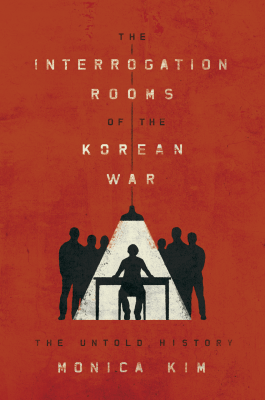
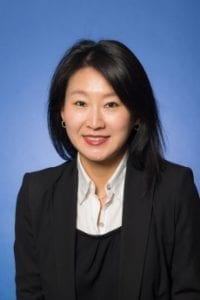
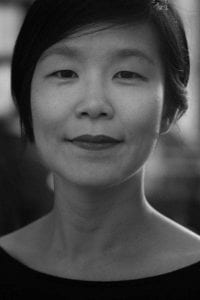 Monica Kim is Assistant Professor in U.S. and the World History in the Department of History at New York University. Her book, The Interrogation Rooms of the Korean War: The Untold History (Princeton University Press), is a trans-Pacific history of decolonization told through the experiences of two generations of people creating and navigating military interrogation rooms of the Korean War. She has published work in journals such as Critical Asian Studies and positions: Asia critique concerning U.S. Empire, war-making, and decolonization. She is also a member of the Editorial Collective for Radical History Review. Her research and writing have been supported by fellowships from the Institute for Advanced Study, the Penn Humanities Forum at University of Pennsylvania, and the Korea Foundation.
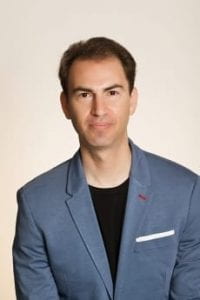 Gregg A. Brazinsky is Professor of History and International Affairs and Deputy Director of GW Institute for Korean Studies. His research seeks to understand the diverse and multi-faceted interactions among East Asian states and between Asia and the United States. He is the author of Nation Building in South Korea: Koreans, Americans, and the Making of a Democracy (University of North Carolina Press, 2007) and Winning the Third World: Sino-American Rivalry during the Cold War (University of North Carolina Press, 2017). He served as Interim Director of the GW Institute for Korean Studies during the Spring 2017 semester.