12/02 Dictator’s Modernity Dilemma: Development and Democracy in ROK, 1961-1987
Speaker: Dr. Joan Cho Wesleyan University
Wednesday, December 2, 2020
3:00 p.m. – 4:30 p.m. Eastern Time
Virtual Event via Zoom
This event is on the record and open to the public.
Event Description
Dictator’s Modernity Dilemma: Development and Democracy in South Korea, 1961-1987 aims to reconcile the two seemingly contradictory views regarding Korea’s path to modernity and democracy. At first blush, South Korea illustrates the basic premise of modernization theory: economic development leads to democracy. However, under Park Chung Hee (1961-1979) and Chun Doo Hwan (1980-1988), Korea’s political system became increasingly authoritarian alongside the growth of the national economy. These South Korean autocrats sought legitimacy of their coup-born regimes by holding legislative elections and investing in economic development. In this book project, I argue and demonstrate that the structural foundations of modernization (industrial complexes and higher education in particular) had an initial stabilizing effect on authoritarian rule by increasing regime support, but also contributed to the development of mobilizing structures for anti-regime protests in the 1970s and 1980s. By highlighting the differential impacts of modernization structures over time, this research shows how socioeconomic development acted as a “double-edged sword” by stabilizing the regimes at first, but destabilizing the dictatorship over time.
Speaker
 Dr. Joan Cho is an Assistant Professor of East Asian Studies and Government at Wesleyan University. Cho specializes in authoritarianism, democratization, social movements, and authoritarian legacies in Korea and East Asia. Her research on authoritarian regime support, South Korean democracy movement, and electoral accountability in post-transition South Korea are published in Electoral Studies, Journal of East Asian Studies, Studies in Comparative International Development, and Routledge Handbook of Korean Culture and Society. Cho’s other writings have appeared in the Pacific Affairs and The Conversation. Dr. Cho received her Ph.D. and A.M. degrees in Political Science from the Department of Government at Harvard University and a B.A. (cum laude with honors) in Political Science from the University of Rochester. She is an Associate-in-research of the Council of East Asian Studies at Yale University, Executive Secretary of the Association of Korean Political Studies, and a 2018-2019 U.S.-Korea NextGen Scholar. Cho previously held visiting fellow positions at the Asiatic Research Institute at Korea University, Taiwan Foundation for Democracy, and the Center for International Studies at Seoul National University.
Moderator
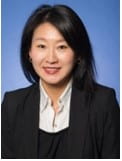 Jisoo M. Kim is Korea Foundation Associate Professor of History, International Affairs, and East Asian Languages and Literatures and Director of the Institute for Korean Studies at GW. She also currently serves as Editor-in-Chief of the Journal of Korean Studies. She is a specialist in gender, law, and emotions in Korean history. Her broader research interests include gender and sexuality, crime and justice, forensic medicine, literary representations of the law, history of emotions, vernacular, and gender writing. She is the author of The Emotions of Justice: Gender, Status, and Legal Performance in Chosŏn Korea (University of Washington Press, 2015), which was awarded the 2017 James Palais Prize of the Association for Asian Studies. She is also the co-editor of The Great East Asian War and the Birth of the Korean Nation by JaHyun Kim Haboush (Columbia University Press, 2016). She is currently working on a book project tentatively entitled Sexual Desire, Crime, and Gendered Subjects: A History of Adultery Law in Korea. She received her M.A., M.Phil., and Ph.D. in East Asian Languages and Cultures from Columbia University.